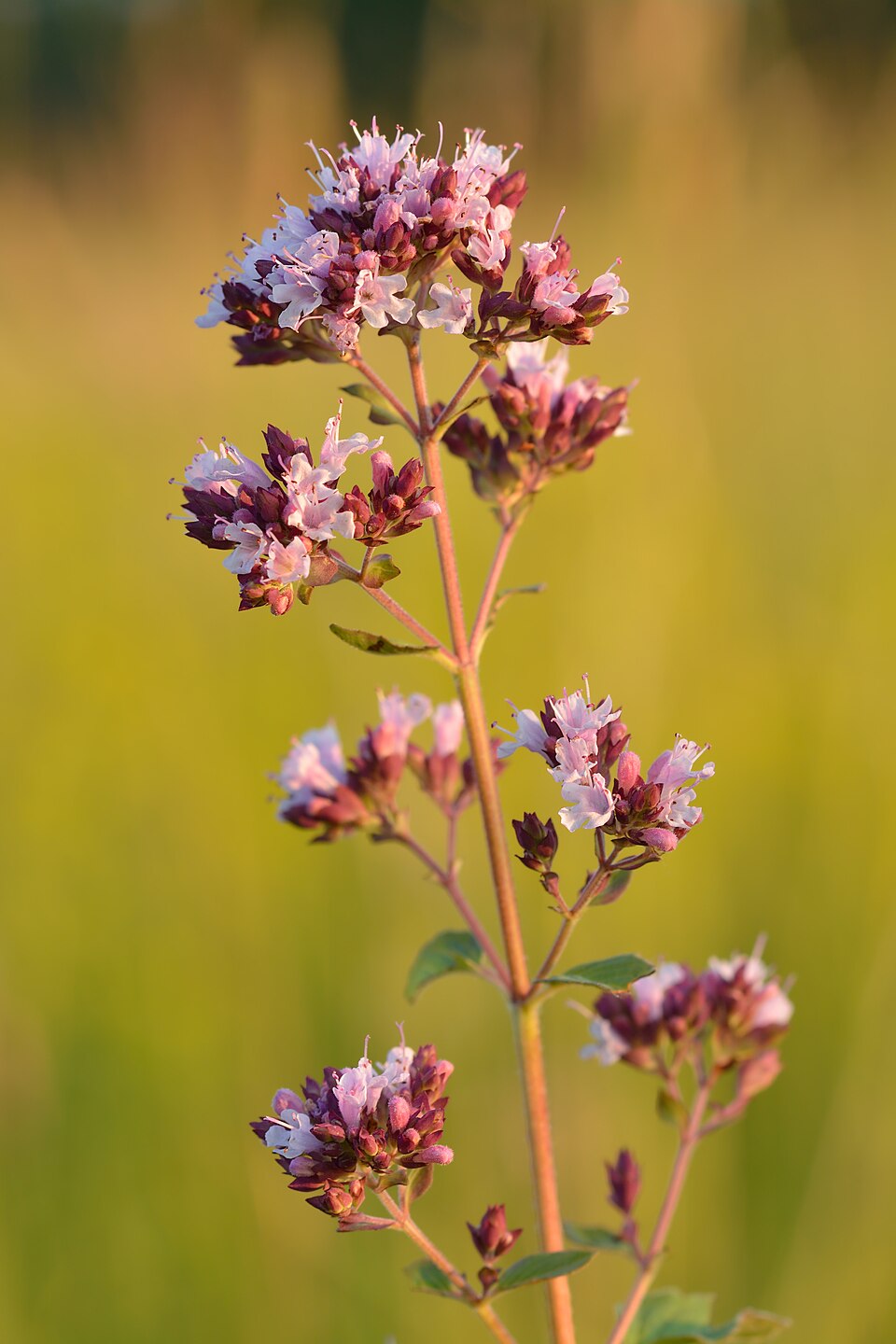

ὀρίγανος Ἡρακλεωτική· οἱ δὲ κονίλην καλοῦσι. φύλλον ἔχει ἐμφερὲς ὑσσώπῳ, σκιάδιον δὲ οὐ τροχοειδές, ἀλλ' ὥσπερ διῃρημένον …The Greek plant is subsp. hirtum; modelled at species level. Source: Sprengel 1830, vol. 2, p. 508; Fraas 1845, p. 181; Osbaldeston 2000.
Full citation and quoted evidence
Sprengel 1830, vol. 2, p. 508 (Comm. III cap. XXIX): ὀρίγανος Ἡρακλεωτική = 'Origanum heracleoticum' (Linnaeus' name, following Matthiolus who first recognised it); Sibthorp agrees and saw it 'in Graeciae montosis siccis haud rarum'. Sprengel names Origanum heracleoticum L., not O. vulgare subsp. hirtum; equating O. heracleoticum L. with O. vulgare subsp. hirtum is a later taxonomic synonymy NOT stated in this source. Confidence 'probable' because the source gives no competing candidate but the modern name mapping is ours. Fraas 1845, p. 181: '15. Origanum heracleoticum L., scharfer Organ' = ὀρίγανος ἡρακλεωτική Diosc. 3,29; Cunila gallinacea Plin.; modern ῥίγανι ('Alle Arten!'); not rare on rocky hills of E Greece (Nauplia, Astros), to 1500 ft. (Fraas assigns Orig. vulgare v. album to ἀγριορίγανος, Diosc. 3,31 - a different chapter.) Osbaldeston 2000, ch. 3-32 ORIGANOS ERAKLEOTIKE: SUGGESTED Origanum heracleoticum [Loudon]. (https://archive.org/details/BIUSante_dioscsprengelx02/page/n509/mode/1up ; https://archive.org/details/synopsisplantaru00fraa/page/n226/mode/1up)
Opening words of the chapter (Wellmann numbering). Edition: Wellmann, Pedanii Dioscuridis Anazarbei De materia medica, vol. II (Berlin 1906), p. 37; read off the archive.org page image (item b21459162_0002) and cross-checked against two OCR layers; ϑ printed as θ. See the page scan.