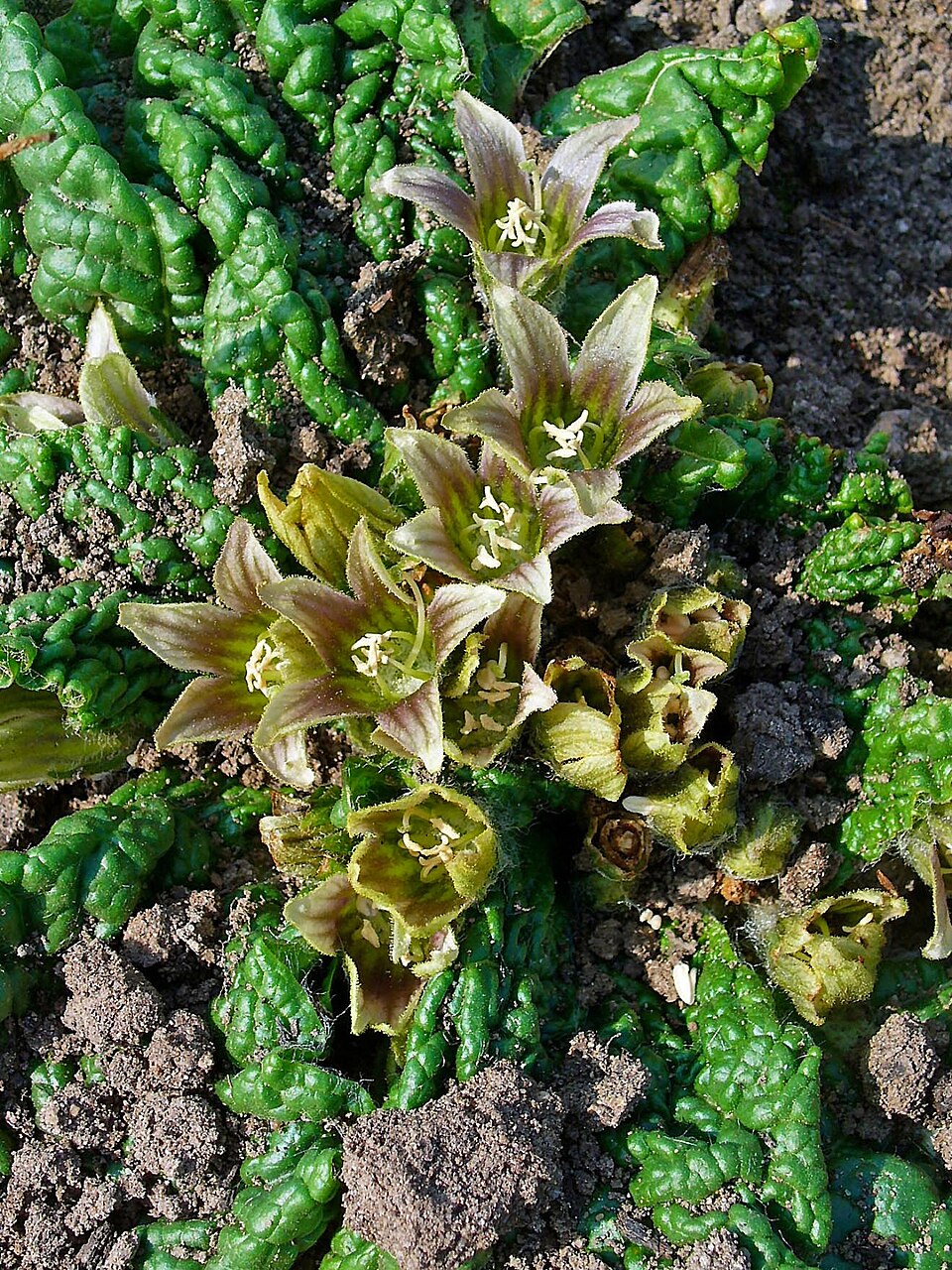

μανδραγόρας· οἱ δὲ ἀντίμιμον, οἱ δὲ βομβόχυλον, οἱ δὲ Κιρκαίαν[, οἱ δὲ Διρκαίαν] καλοῦσιν, ἐπειδὴ δοκεῖ ἡ ῥίζα φίλτρων εἶναι ποιητική. …WCVP treats Greek mandrakes as M. autumnalis; the Greek checklist and GBIF Backbone merge it into M. officinarum. Both names are pooled. Source: Sprengel 1830, vol. 2, pp. 604-605; Fraas 1845, p. 167; Osbaldeston 2000.
Full citation and quoted evidence
Sprengel 1830, vol. 2, pp. 604-605 (Comm. IV cap. LXXVI): three kinds; the first two 'bene, ut ab αὐτόπτῃ, descripta'. Female (black, narrower leaves, sorb/pear-shaped fruit) = Mandragora autumnalis Bertol.; male (white, large beet-like leaves, larger saffron-coloured fragrant fruit) = Mandragora vernalis Bertol.; 'Utraque species et in Italia et in Graecia, speciatim circa Athenas occurrit.' Third kind (μώριον) either the same as the male or Theophrastus' plant suspected by Anguillara (with Dodonaeus) to be Belladonna. Genus certain; mapping of Bertoloni's names to M. officinarum L. s.l. is ours. Fraas 1845, p. 167: 'At[ropa] Mandragora L., Alraunwurzel' = μανδραγόρας μέλας, ἀντίμηλον, κιρκαία etc. Diosc. 3,134 [sic], who 'mentions the 2 varieties distinguished by flowering time - vernalis and autumnalis; of the third he speaks only from hearsay'; modern name μανδραγόρας. Osbaldeston 2000, ch. 4-76: SUGGESTED Mandragora mas [Fuchs], M. fructu rotundo [Bauhin], Mandragora officinarum [Linnaeus], Atropa mandragora. (https://archive.org/details/BIUSante_dioscsprengelx02/page/n606/mode/1up ; https://archive.org/details/synopsisplantaru00fraa/page/n212/mode/1up)
Opening words of the chapter (Wellmann numbering). Edition: Wellmann 1906, Pedanii Dioscuridis Anazarbei De materia medica vol. II (libri III-IV), Berlin: Weidmann; read from page scan on archive.org (BIUSante_65865x02), p. 233. See the page scan.