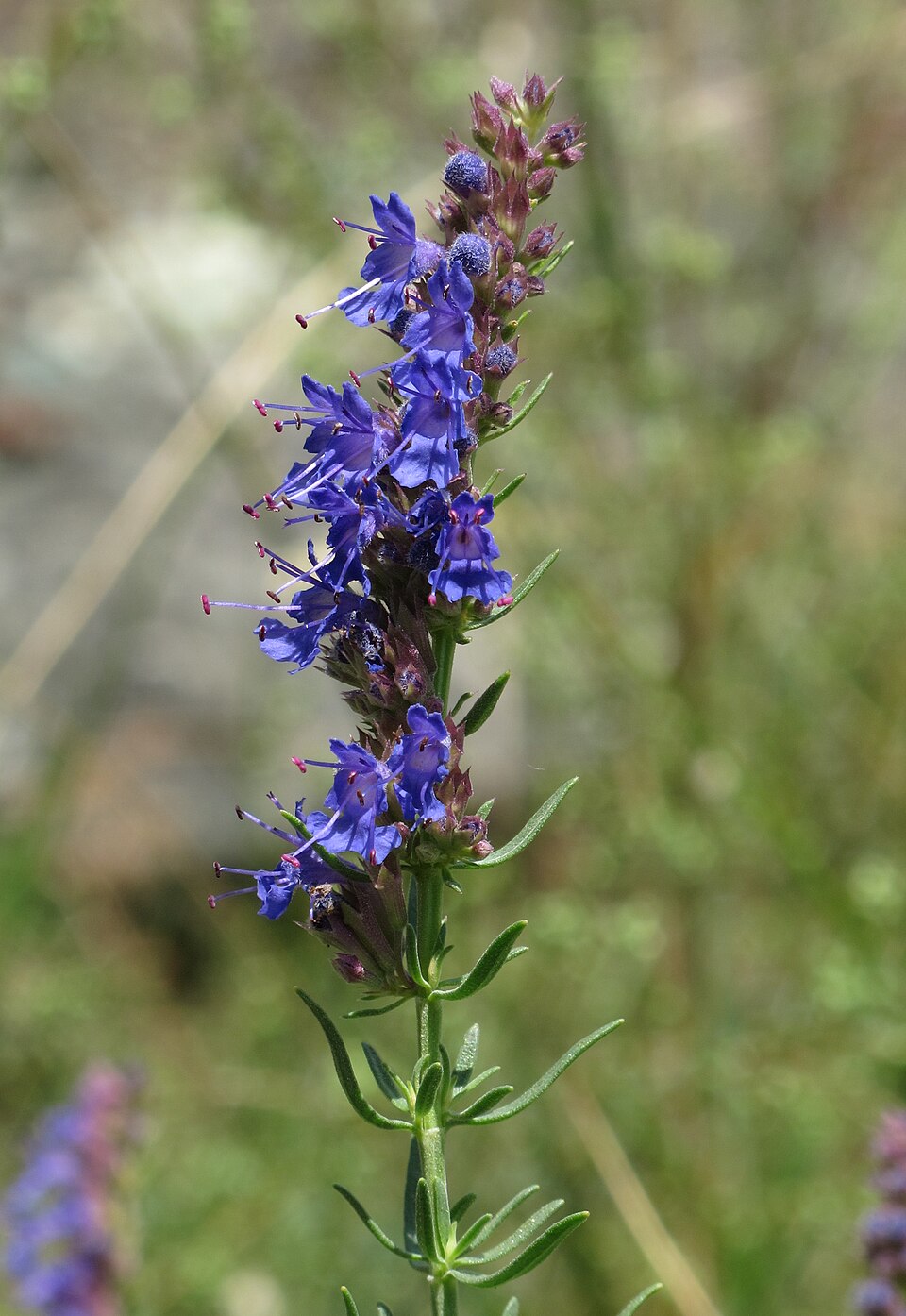

ὕσσωπος· πόα γνώριμος, δισσή· ἡ μὲν γάρ τίς ἐστιν ὀρεινὴ ἡ δὲ κηπευτή· ἀρίστη δὲ ἡ ἐν Κιλικίᾳ γεννωμένη. …Very few Greek records. The alternative identification, Origanum syriacum, does not grow wild in Greece, so it cannot be modelled here. COL now places H. officinalis in Dracocephalum. Source: Sprengel 1830, vol. 2, pp. 506-507; Fraas 1845, p. 182; Osbaldeston 2000.
Full citation and quoted evidence
Sprengel 1830, vol. 2, pp. 506-507 (Comm. III cap. XXVII): Dioscorides gives no diagnostic indication; Sprengel conjectures Origanum aegyptiacum / O. syriacum / O. smyrnaeum and states that 'our' hyssop (H. officinalis), spontaneous in S France and Italy, is 'neque in Graecia, Syria, aut Aegypto obvii' and was given the name by medieval writers (first figured by Tragus). He does NOT identify ὕσσωπος with Hyssopus officinalis. Fraas 1845, p. 182: ὕσσωπος Diosc. 3,27 = 'Orig. smyrnaeum vel syriacum L.'; 'Bei Mangel aller weiteren Beschreibung des Yssop im Diosc. folge ich Sprengel'; 'Es wächst hysoppus off. nicht in Griechenland, noch in Kleinasien oder Syrien!'; Thymbra spicata 'passt nicht wohl'. Also p. 174: 'Hyssopus officinalis ist eine unserer Flora ganz fremde Pflanze'. Osbaldeston 2000, ch. 3-30 USSOPOS: SUGGESTED Hyssopus hortensis [Fuchs], Hyssopus officinalis [Linnaeus], Origanum syriacum - Hyssop of the Bible [Mabberley]. (https://archive.org/details/BIUSante_dioscsprengelx02/page/n508/mode/1up ; https://archive.org/details/synopsisplantaru00fraa/page/n227/mode/1up ; https://archive.org/details/synopsisplantaru00fraa/page/n219/mode/1up)
Opening words of the chapter (Wellmann numbering). Edition: Wellmann 1906, Pedanii Dioscuridis Anazarbei De materia medica vol. II (libri III-IV), Berlin: Weidmann; read from page scan on archive.org (BIUSante_65865x02), p. 35. See the page scan.