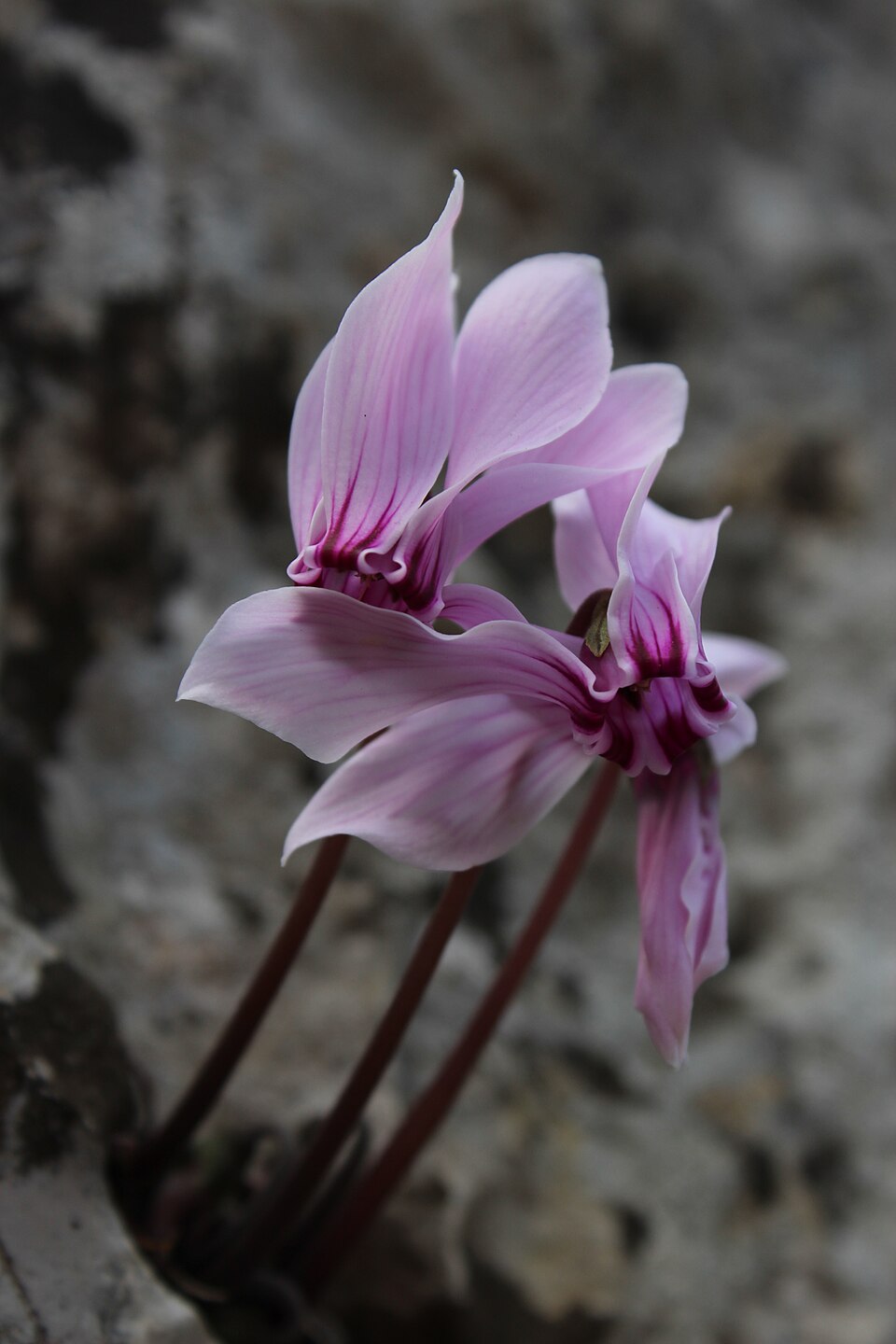

κυκλάμινος· φύλλα ἔχει ὅμοια κισσῷ, ποικίλα δὲ κάτωθεν καὶ ἄνωθεν κηλῖσιν ὑπολεύκοις, καυλὸν δὲ τετραδάκτυλον, γυμνόν, ἐφ' οὗ ἄνθη ῥοδοειδῆ, πορφυρίζοντα …Source: Sprengel 1830, vol. 2, pp. 478-479; Fraas 1845, p. 192; Osbaldeston 2000.
Full citation and quoted evidence
Sprengel 1830, vol. 2, pp. 478-479 (Comm. II cap. CXCIII): discusses only names (sowbread etc.) and uses (Gerard on childbirth); no species is named in the text. Index V, p. 704: 'Cyclamen europaeum L. 478'. Sprengel does not distinguish C. graecum from C. hederifolium; neither name appears. Second κυκλάμινος (cap. CXCIV) he takes as Lonicera periclymenum (after C. Gesner). Fraas 1845, p. 192: '1. Cyclamen graecum Lk., griechisches Schweinsbrod' - 'Ist die häufigste in Griechenland, nebst persicum vorkommende Art, welche gewiss das κυκλάμινος ... Diosc. 2,193 ... ist'; only 'nascitur in umbrosis' is a difficulty. Fraas rejects Billerbeck's referral of Cyclamen hederaefolium to κυκλάμινος ἑτέρα (which he, like Sprengel, takes as Lonicera periclymenum). Modern τρικλαμινός; dry hills, rocks, to 2000 ft (Argolis, Attica). Osbaldeston 2000, ch. 2-194 KUKLAMINOS: SUGGESTED Cyclamen europaeum [Linnaeus] ... and Cyclamen graecum. ANSWER: Fraas names C. graecum; no opened source names C. hederifolium for κυκλάμινος (II 164). (https://archive.org/details/BIUSante_dioscsprengelx02/page/n479/mode/1up ; https://archive.org/details/synopsisplantaru00fraa/page/n237/mode/1up)
Opening words of the chapter (Wellmann numbering). Edition: Wellmann, Pedanii Dioscuridis Anazarbei De materia medica, vol. I (Berlin 1907), p. 228; read off the archive.org page image (item b21459162_0001; the OCR of this volume is not usable Greek); ϑ printed as θ. See the page scan.